There is something quietly satisfying about a tidy garage or workshop. When every spanner, screwdriver, and drill bit has a home, jobs get done faster, frustration drops, and you stop buying duplicate items just because you cannot find the originals. For most households, though, the reality is a jumble of tools spread across shelves, windowsills, and the back of the car boot.
Group Tools by How You Use Them
Before you invest in any storage, take everything out and sort it honestly. Tools that are broken, rusted beyond use, or that you have genuinely never reached for in years are worth passing on or disposing of responsibly.
The most effective storage systems are built around how you actually work, not just what looks neat. A good starting point is to group tools into a few broad categories:
Everyday hand tools such as hammers, screwdrivers, pliers, and tape measures benefit from being the most accessible. These are the items you reach for several times a week, so they should never be buried at the back of a drawer.
Project-specific tools like a tile cutter, pipe bender, or mitre saw are used less regularly. These can be stored in a more dedicated space, ideally with their accessories nearby so everything is together when you need it.
Consumables and fixings including screws, nails, rawl plugs, and cable ties have a habit of multiplying and disappearing simultaneously. Small, labelled containers or stackable drawers work well here.
Seasonal and specialist equipment such as a pressure washer, hedge trimmer, or extension ladder can often be stored in less accessible spots since they come out infrequently.
Do not overlook vertical space either. Wall-mounted pegboards, magnetic strips, and a few solid shelves at varying heights can dramatically increase your usable storage without claiming any floor space.
Invest in Proper Tool Storage
For households with a growing collection of hand tools and power tool accessories, dedicated tool storage such as tool chests and roller cabinets makes a genuine difference. These units are designed to keep tools protected, organised, and easy to find at a glance.
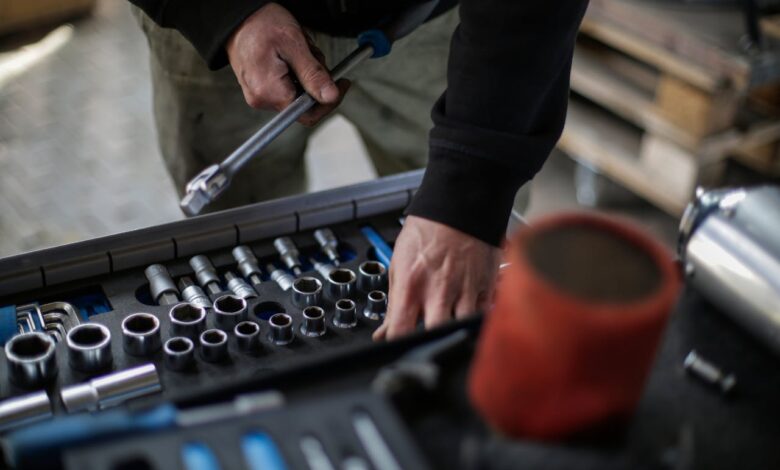
A good tool chest typically offers a combination of shallow drawers for hand tools and deeper drawers for heavier items. The key advantage over improvised shelving is that everything stays in its place, even if the unit is moved or knocked. Many come with foam inserts or can be customised with drawer liners that let you cut out exact shapes for each tool, making it immediately obvious if something is missing.
For those who work across different locations, a portable tool bag or a smaller chest on wheels means you are not lugging everything from room to room.
Label Everything
This step sounds obvious, but it is the one most people skip. Labelling shelves, drawers, and containers takes about ten minutes and saves hours of searching over the course of a year. Even a basic label maker or some masking tape and a marker pen will do the job.
If you share a garage or workshop with other members of the household, clear labelling also means everyone knows where things belong and, just as importantly, where to return them.
Think About Protection as Well as Organisation
Storage is not just about knowing where things are. It is also about keeping your tools in good working order. A few simple habits make a real difference:
Moisture is the enemy of most hand tools. Keeping a small silica gel sachet in each drawer helps absorb humidity and reduces the risk of rust. If your garage is particularly damp, a dehumidifier is worth considering.
Cutting tools and drill bits last longer when they are stored properly, rather than rattling around loose in a drawer where the edges can be damaged. Small cases, magnetic strips, or foam inserts all help.
Leads and cables are much easier to manage when they are coiled neatly and secured with a velcro strap rather than stuffed into a box. This also prevents damage to the cable over time.
Keep the System Working Long Term
The biggest challenge with any organisation project is maintaining it. A few small habits help enormously. Returning tools to their place immediately after use, rather than leaving them on the workbench “for now,” is the single most effective habit you can build. It takes no extra time in the long run and keeps the whole system functional.
It also helps to do a quick review a couple of times a year. Tools wear out, your collection changes, and a storage system that worked perfectly eighteen months ago might need a small adjustment to suit how things have evolved.
Storage Beyond the Workshop
It is worth remembering that good storage habits extend beyond the garage. If you keep cleaning materials under the kitchen sink, garden tools in a shed, or emergency supplies in a hall cupboard, the same principles apply. Grouping like with like, keeping frequently used items accessible, and using vertical space wherever possible will improve any storage area in the home.
For those who are also managing materials on site or during renovation projects, the same logic applies to larger supplies. A well-organised approach to handling and storing materials on site can prevent waste and keep projects running smoothly, and many of the organisational principles overlap neatly with good workshop habits at home.
Getting your tool storage under control is one of those home improvements that quietly pays back over and over again. You will spend less time searching, less money replacing lost items, and less frustration on the jobs that matter. Start with a clear-out, think about how you actually work, and build a system that fits your space and your habits.