Darrell Clark – Inspiring Journey of an English Football Manager and Former Player
From Adversity to Triumph: The Story of Leadership, Resilience, and Passion in Football

Introduction
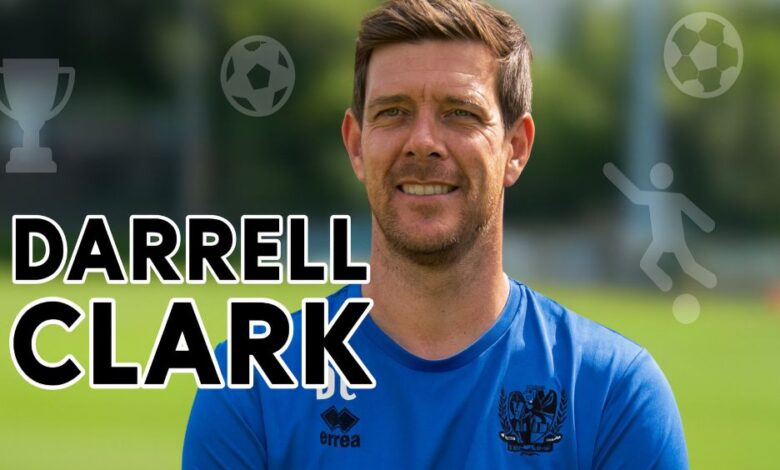
Darrell Clark, known fully as Darrell James Clarke, stands as one of the most determined and resilient figures in English football. His remarkable journey from a tough childhood in Mansfield to becoming an accomplished English professional football manager and former player showcases not only talent but also an extraordinary willpower to succeed. With multiple promotions, managerial achievements, and a legacy of leadership under pressure, Clark has inspired players, fans, and the footballing world alike.
Raised in challenging circumstances, he turned personal hardships into fuel for his ambitions. His career has been filled with both positive triumphs—such as guiding Bristol Rovers to back-to-back promotions—and negative challenges, including relegations and managerial sackings. Through it all, Darrell Clark has become a symbol of perseverance in modern football.
Table of Contents
ToggleQuick Bio of Darrell Clark
| Attribute | Details |
|---|---|
| Full Name | Darrell James Clarke |
| Date of Birth | 16 December 1977 |
| Age | 47 years (as of 2025) |
| Birthplace | Mansfield, Nottinghamshire, England |
| Nationality | English |
| Height | 1.78 m (5 ft 10 in) |
| Profession | English professional football manager, former player |
| Current Role | Head Coach, Bristol Rovers (2025) |
| Known For | Back-to-back promotions with Bristol Rovers; resilience as a manager |
| Clubs Managed | Salisbury City, Bristol Rovers, Walsall, Port Vale, Cheltenham Town, Barnsley |
Early Life and Childhood
Darrell Clark was born in Mansfield, a town deeply connected to football. His upbringing was far from easy. He lost his mother in a car accident when he was just two years old, and his father battled alcoholism. Alongside his brother Wayne, Clark was raised by his grandparents, who instilled in him discipline and resilience.
Despite the hardships, Clark’s love for football blossomed early. His grandfather, who worked as a steward at Mansfield Town, inspired him to pursue the game. Growing up in the Ladybrook estate, Clark often described his environment as rough, but it was there he developed the determination that would later define his career.
Playing Career Beginnings
Clark joined the youth ranks of Mansfield Town in 1987, quickly showcasing his energy and leadership qualities as a box-to-box midfielder. By 1995, he had broken into the first team, where he would spend six years.
During his time at Mansfield Town, he made over 150 league appearances and scored more than 20 goals. His performances earned him recognition as a hardworking, combative midfielder who could contribute both defensively and offensively. His progress opened doors for a move to a higher level.
Peak Playing Career
In 2001, Clark joined Hartlepool United, a club where he would enjoy some of his finest years as a player. Over six seasons, he made more than 120 appearances, helping the team gain promotion and competing in higher divisions. His commitment and determination earned him respect from teammates and fans alike.
He also had brief loan spells at Stockport County, Port Vale, and Rochdale, further broadening his experience in the Football League. In 2007, Clark moved to Salisbury City, where he played for six years and eventually became club captain. This period marked a turning point in his career, as he gradually transitioned into a managerial role.
Transition into Management
Clark’s leadership qualities were impossible to ignore. In 2010, while still at Salisbury City, he was appointed player-manager, marking the official start of his managerial career. Under his guidance, Salisbury achieved promotion from the Southern League Premier Division in his first season.
Over the following years, he continued his success with Salisbury, leading them to promotion from the Conference South in 2013. His ability to build teams on limited budgets demonstrated his sharp eye for talent and tactical acumen. This success caught the attention of clubs higher up the football pyramid.
Managerial Career Highlights
Bristol Rovers – Back-to-Back Promotions
In 2013, Clark joined Bristol Rovers as assistant manager, and within a year, he was promoted to manager. His early tenure was tough, as Rovers were relegated from the Football League in 2014. Instead of letting this define him, Clark orchestrated a remarkable turnaround.
He led Rovers back into the Football League in 2015 through the Conference Premier play-offs. The following season, he achieved another promotion, guiding the club from League Two to League One. These back-to-back promotions cemented his reputation as one of the most promising young English managers.
Walsall and Port Vale – Building Teams Under Pressure
In 2019, Clark took over at Walsall, focusing on rebuilding the squad. While his tenure had mixed results, he laid the foundations for progress. In 2021, he joined Port Vale, where he again showed his ability to inspire teams. His crowning achievement came in 2022, when Vale won the League Two play-offs under his management.
Cheltenham Town and Barnsley – Challenges and Growth
In 2023, Clark joined Cheltenham Town in a difficult situation with the club at the bottom of League One. Despite his efforts, relegation followed. In 2024, he was hired by Barnsley, but after poor results, his tenure ended in March 2025.
Return to Bristol Rovers – A Homecoming
In May 2025, Darrell Clark returned to Bristol Rovers as head coach on a three-year contract. His return was welcomed by fans who remembered his earlier successes and viewed him as the right man to restore the club’s fortunes.
Managerial Style and Philosophy
Darrell Clark is widely respected for his tactical flexibility. He is not bound to a single formation and adapts based on his squad and opposition. He is known for running intense training sessions, demanding high fitness levels, and emphasizing team spirit and chemistry.
He often describes himself as a tough manager, once saying: “Soft players don’t win you promotions.” His philosophy balances discipline with motivation, creating teams that fight for every result.
Achievements and Awards
As a Player
-
Promotion with Hartlepool United (2002–03 season).
As a Manager
-
Salisbury City: Southern League promotion (2011), Conference South play-off promotion (2013).
-
Bristol Rovers: Promotion via Conference Premier play-offs (2015); League Two to League One promotion (2016).
-
Port Vale: League Two play-off winners (2022).
Individual Awards
-
Conference Premier Manager of the Month: Sept 2014, Dec 2014, Feb 2015.
-
EFL League Two Manager of the Month: Mar 2016, Sept 2021, Oct 2021.
Legacy and Impact
Darrell Clark’s legacy is defined by resilience, determination, and the ability to inspire under challenging circumstances. His story resonates with fans because he embodies the fighting spirit of football. From personal hardships to professional highs and lows, he has shown that setbacks can lead to comebacks.
His back-to-back promotions with Bristol Rovers remain a defining moment in modern English lower-league football, and his return to the club in 2025 adds another chapter to his story. Whether celebrated for triumphs or tested by setbacks, Clark’s name is etched into the history of clubs he has served.
Conclusion
Darrell Clark’s biography is more than a career overview—it is the story of persistence against all odds. From his humble beginnings in Mansfield to managing multiple English clubs, his journey reflects passion, dedication, and a refusal to give up. Though his career has seen both highs and lows, his resilience continues to inspire players and supporters alike.
As he embarks on his second spell at Bristol Rovers, the football world watches closely, knowing that Darrell Clark is a leader who thrives under pressure and has the power to turn struggles into success stories.
FAQs
Q1: Who is Darrell Clark?
Darrell James Clarke is an English professional football manager and former player, currently the head coach of Bristol Rovers.
Q2: What clubs has Darrell Clark managed?
He has managed Salisbury City, Bristol Rovers, Walsall, Port Vale, Cheltenham Town, and Barnsley.
Q3: What is Darrell Clark best known for?
He is best known for guiding Bristol Rovers to back-to-back promotions from non-league to League One between 2015 and 2016.
Q4: What was his playing position?
He played as a box-to-box midfielder for clubs including Mansfield Town, Hartlepool United, and Salisbury City.
Q5: What is his current role?
As of 2025, he is the head coach of Bristol Rovers, having returned to the club for a second spell.