Rudi García: A Powerful Journey of a French Football Manager
The Inspiring Rise, Challenges, and Legacy of Rudi José García

Introduction
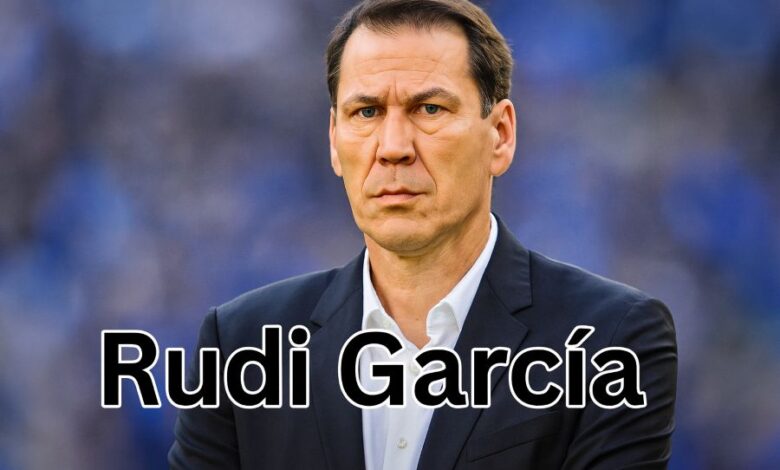
Rudi García, professionally known as Rudi José García, stands among the most respected and tactically gifted figures in European football. Born in Nemours, France, he carved out a distinct identity as a football manager known for his attacking philosophy, bold decisions, tactical clarity, and the ability to inspire collective teamwork. His career has been marked by both remarkable success and difficult challenges, giving him a dynamic legacy that continues to evolve.
As a French football manager, García has led some of Europe’s top clubs, including Lille, AS Roma, Marseille, Lyon, Napoli, and later the Belgium national team. His influence extends far beyond trophies—he is widely recognized for transforming squads, elevating player performance, and bringing a modern, attacking mindset to French coaching. The journey of Rudi García is filled with positivity, controversy, victories, setbacks, and lessons that shaped him into one of the most recognized managers of modern football.
Table of Contents
ToggleQuick Bio
| Category | Details |
|---|---|
| Full Name | Rudi José García |
| Date of Birth | 20 February 1964 |
| Birthplace | Nemours, Seine-et-Marne, France |
| Nationality | French |
| Height | 1.80 m |
| Profession | French Football Manager, Former Footballer |
| Current Role | Head Coach of Belgium National Team (from 2025) |
| Father | José García (Spanish expatriate and former footballer) |
| Children | Three daughters: Carla, Eva, Léna |
| Education | DEUG & STAPS degree, University Paris-Sud |
| Ethnicity | French with Spanish (Andalusian) descent |
Early Life and Origins
Rudi José García grew up in a football-influenced environment thanks to the career of his father, José García, who played professionally in France. This early exposure to the game allowed him to develop a deep understanding of football from a young age. His grandparents, originally from Andalusia in Spain, migrated to France, giving García a rich cultural background shaped by both French and Spanish traditions.
During his early years, García played for local youth clubs such as AS Corbeil-Essonnes and ES Viry-Châtillon. His passion, discipline, and dedication to sports laid the foundation for a future in professional football and later in coaching. His childhood was marked by the kind of determination and ambition that would later define his managerial identity.
Playing Career
García began his senior playing career at Lille OSC, where he spent several seasons showcasing intelligence and technique as a midfielder. He later played for Stade Malherbe Caen and FC Martigues, gaining valuable experience in French football’s competitive environment. Although his playing career ended early due to back and knee injuries, the adversity helped redirect his path toward coaching, a field in which he would soon thrive.
His time as a player also helped him understand the mindset and struggles of professional athletes, later influencing his empathetic and psychologically aware management style.
Education and Coaching Qualification
After retiring as a professional player, Rudi García pursued academic advancement. Between 1992 and 1994, he completed a DEUG and STAPS degree at University Paris-Sud, further strengthening his intellectual approach to sport. He also achieved French coaching qualifications, empowering him to lead youth training centers and eventually senior teams.
This academic and technical background made him different from traditional coaches, helping shape his reputation as a manager with both tactical intelligence and strong educational grounding.
Managerial / Coaching Career Timeline (Table)
| Years | Team/Club | Highlights |
|---|---|---|
| 1994–1998 | AS Corbeil-Essonnes | Player-manager then manager; early demonstration of leadership |
| 2001 | AS Saint-Étienne | Managed the club during a challenging period |
| 2002–2007 | Dijon FCO | Led promotion to Ligue 2 and improved team structure |
| 2007–2008 | Le Mans | Strong performances in Ligue 1 and cup competitions |
| 2008–2013 | Lille OSC | Achieved historic domestic double (Ligue 1 + Coupe de France) in 2010–11 |
| 2013–2016 | AS Roma | Record start with 10 consecutive Serie A victories |
| 2016–2019 | Marseille | Reached UEFA Europa League final in 2017–18 |
| 2019–2021 | Lyon | Guided team to Champions League semi-final (2019–20) |
| 2022–2023 | Al Nassr | Managed top Saudi club |
| 2023 | Napoli | Short managerial spell in Serie A |
| 2025–Present | Belgium National Team | Appointed as national coach |
Managerial Philosophy and Style
Rudi García is known for his offensive tactical approach, focusing on possession-based football with rapid counterattacks. His teams play with high intensity, creativity, and strong collective spirit. He encourages players to express their individual strengths while maintaining tactical discipline.
García’s style blends French precision and Spanish temperament, influenced by his heritage. His leadership has helped several young stars rise to prominence, proving his impact on player development.
Major Achievements
One of García’s most memorable successes came in 2010–11 when he guided Lille to a historic Ligue 1 and Coupe de France double—a rare accomplishment in French football. His time at AS Roma also earned him recognition across Europe, especially after achieving a record-breaking start in Serie A. His leadership at Lyon, including a Champions League semi-final run, further solidified his status as a top-level European manager.
Challenges and Controversies
Although praised widely, García has experienced challenging moments. His brief spell at Napoli ended quickly after inconsistent results. Earlier, while managing Roma, he was sent off during a match against Juventus for protesting a referee decision. These events illustrate the pressures associated with managing elite football clubs.
Despite setbacks, García consistently bounced back, proving his resilience and mental strength.
Legacy
Rudi García leaves a significant mark on modern football. He helped modernize French coaching ideology by prioritizing attacking football. His guidance shaped numerous players and brought competitive success to every league he worked in. His journey reflects ambition, persistence, and an unwavering passion for the sport.
As he continues his leadership with the Belgium national team, his legacy continues to grow, influencing future generations of coaches and players.
Conclusion
Rudi José García’s life story is a compelling blend of triumph, struggle, learning, and evolution. From his childhood in France to managing top clubs across Europe, his journey stands as proof of what passion and resilience can achieve. A progressive thinker and a bold strategist, García remains a powerful force in world football. His impact on clubs, players, and international football is undeniable, ensuring his place among the most influential managers of his era.
FAQ
1. Who is Rudi García?
Rudi García is a French football manager and former player known for his attacking playing style and successful career across major European clubs.
2. What is Rudi García best known for?
He is best known for leading Lille to the Ligue 1 and Coupe de France double in the 2010–11 season.
3. Which clubs has Rudi García managed?
He has managed Lille, Roma, Marseille, Lyon, Al Nassr, Napoli, and the Belgium national team.
4. What is his coaching style?
His philosophy focuses on possession-based football, quick transitions, and encouraging player creativity.
5. What is Rudi García’s nationality?
He is French, with Spanish (Andalusian) roots.