Hot-rolled Seamless Steel Pipe vs. Cold-rolled/Cold-drawn Seamless Steel Pipe

Introduction
If you need steel pipes for your project, you have probably seen the terms hot-rolled seamless steel pipe and cold-rolled or cold-drawn seamless steel pipe. These two types look similar at first, but they are made in different ways and work best for different jobs. Many people ask which one is better or cheaper. The truth is, it depends on what you need. In this article, we will walk through everything step by step. We will explain what each type is, how it is made, the main differences, the good and bad points of each, and where you should use them. By the end, you will know exactly which one fits your needs. Let’s get started.
What Are Hot-rolled Seamless Steel Pipes?
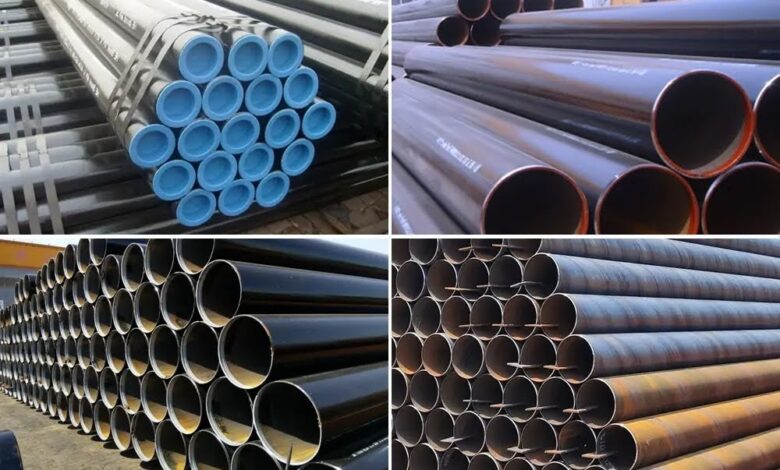
Hot-rolled seamless steel pipes are tubes made from solid steel without any joints or welds. The name “hot-rolled” comes from the high heat used during the whole process. Workers start with a round steel piece called a billet. They heat it until it is soft, almost like clay. Then they push a tool through the middle to create a hole. After that, rollers shape the hot metal into a pipe while it is still very hot. Because everything happens at high temperature, the pipe can be made in large sizes. These pipes usually have an outer diameter from 20 mm up to 800 mm or more. The walls can be thick or thin, depending on the order. The surface feels a bit rough because the high heat leaves small marks. Hot-rolled seamless steel pipes are strong and can handle a lot of pressure. They are also easier to produce in big amounts, so the price is usually lower. Many factories keep large stocks of these pipes ready for quick delivery.
What Are Cold-rolled or Cold-drawn Seamless Steel Pipes?
Cold-rolled and cold-drawn seamless steel pipes are also made without seams, but they get extra work after the first hot step. The main difference is that the final shaping happens at room temperature, not with heat. People often use the words “cold-rolled” and “cold-drawn” together because both methods cool the pipe down and pull or roll it to make it better. Cold-drawn is more common for tubes because it uses a die to pull the pipe through a smaller hole. This makes the pipe smaller, straighter, and smoother. The sizes are usually smaller than hot-rolled ones, from 6 mm to about 200 mm outer diameter. The surface looks shiny and clean. The measurements are very exact, with almost no difference from one pipe to the next. Because of the extra steps, these pipes cost more, but they give you better control over size and finish. If your project needs pipes that fit perfectly or look nice, this type is often the right choice.
How Hot-rolled Seamless Steel Pipes Are Made
The making process for hot-rolled seamless steel pipes is pretty straightforward. First, a steel billet is cut to the right length. Next, it goes into a furnace and heats up to around 1200 degrees Celsius. At this temperature, the steel becomes soft enough to shape without cracking. A piercing mill then pushes a pointed tool straight through the center of the hot billet to make the inside hole. After piercing, the pipe moves to a rolling mill. Rollers press and stretch the hot pipe until it reaches the right diameter and wall thickness. The pipe cools down slowly in the air. Finally, workers cut it to length, check the quality, and sometimes do simple straightening. The whole process takes only a few minutes per pipe, which is why factories can make large quantities fast. No welding is used at any step, so the pipe stays seamless and strong all around.
How Cold-rolled or Cold-drawn Seamless Steel Pipes Are Made
Cold-rolled and cold-drawn seamless steel pipes start the same way as hot-rolled ones. They begin as hot-rolled pipes, but then they go through extra steps at normal room temperature. First, the hot-rolled pipe is cleaned and sometimes treated to remove scale. Then it is ready for cold work. In cold-drawing, the pipe is pulled through a hard metal die that is smaller than the pipe itself. This pulling action reduces the diameter and makes the walls thinner or thicker as needed. Sometimes a mandrel is placed inside to control the inner size. Cold-rolling uses rollers instead of a die to press the pipe from the outside. Both methods make the steel harder and stronger because the metal grains get squeezed together. After drawing or rolling, the pipe may need stress-relief heat treatment to make it less brittle. The final result is a pipe with smooth surface, tight size tolerance, and better straightness. These extra steps take more time and energy, so the pipes cost more to produce.
Key Differences Between Hot-rolled and Cold-rolled Seamless Steel Pipes
Now let’s look at the main ways these two types differ. First, temperature: hot-rolled pipes are shaped while very hot, whereas cold-rolled or cold-drawn pipes are finished at room temperature. This changes everything else. Surface finish is one big difference. Hot-rolled pipes have a rough, dark surface, but cold ones are smooth and shiny. Size accuracy is another. Hot-rolled pipes can vary a little in diameter and wall thickness, while cold ones are very precise, often within 0.1 mm. Strength and hardness also change. Cold working makes the metal stronger and harder, but it can be a bit more brittle unless treated. Price is different too. Hot-rolled pipes are cheaper because they need fewer steps and less special equipment. Hot-rolled pipes are available in larger sizes, while cold-rolled pipes are usually smaller and thinner. Finally, the way they handle pressure is similar, but cold pipes often perform better in precise applications because of their exact size.
Advantages of Hot-rolled Seamless Steel Pipes
Hot-rolled seamless steel pipes have several clear advantages. They are cheaper to buy, which helps when your project needs many pipes or a tight budget. The production speed is fast, so you can get large orders delivered quickly. They work great for big sizes that cold pipes cannot reach. The thick walls handle heavy loads and high pressure well. Because the process uses heat, the steel stays flexible and does not crack easily during forming. These pipes are also easy to weld or connect on site. Many builders like them for structural work where looks do not matter as much as strength and cost.
Advantages of Cold-rolled or Cold-drawn Seamless Steel Pipes
Cold-rolled and cold-drawn seamless steel pipes shine in situations that need precision and a nice finish. Their smooth surface reduces friction, which is useful in fluid systems. The tight size control means parts fit together perfectly without extra machining. The extra strength from cold work lets you use thinner walls and still keep the same pressure rating, which saves weight. These pipes look clean and professional, so they are popular in visible installations. They also resist rust better after polishing or coating. Even though they cost more upfront, they can save money later because less work is needed to install or finish them.
Applications and When to Choose Each Type
Different jobs call for different pipes. Hot-rolled seamless steel pipes are common in oil and gas pipelines, large structural frames, boiler tubes, and heavy machinery. They are also used for scaffolding, shipbuilding, and construction support where size and strength matter more than aesthetics. On the other hand, cold-rolled or cold-drawn seamless steel pipes are chosen for hydraulic systems, automotive parts, precision instruments, medical equipment, and furniture frames. They work well in heat exchangers, air conditioning lines, and any place where exact measurements or smooth flow is important. If your project needs large pipes and you want to save money, go with hot-rolled. If you need small, precise pipes with a clean finish, pick cold-rolled or cold-drawn. Always check the pressure, temperature, and environment before you decide.
Conclusion
Hot-rolled and cold-rolled or cold-drawn seamless steel pipes both have their place in the steel world. Hot-rolled ones give you size, strength, and low cost for big jobs. Cold ones give you precision, smooth finish, and extra strength for detailed work. By understanding the differences in how they are made and what they offer, you can choose the right pipe every time and avoid wasting money or time. If you are looking for reliable suppliers who offer both types with good quality control, visit https://uniasen.com/. To learn more about how seamless pipes compare with welded options like ERW, LSAW, and SSAW, click here. Now that you know the facts, you can make smart choices for your next project.