The UK workplace has undergone a significant transformation in recent years, with businesses across the country embracing more adaptable and responsive ways of working. From large corporations to small enterprises, organisations are rethinking traditional office models in favour of flexibility, efficiency and employee wellbeing.
This shift is particularly evident across the North of England, where businesses are increasingly prioritising access to high-quality, on-demand workspaces. Rather than maintaining large permanent offices, many organisations are choosing flexible solutions that allow teams to collaborate when needed while supporting remote working the rest of the time.
A New Era of Work
Moving Beyond Traditional Offices
For decades, the traditional office was the centre of business activity. Employees commuted daily, worked fixed hours and operated within clearly defined spaces. However, advances in technology and changing expectations have reshaped this model.
Cloud computing, video conferencing and digital collaboration tools now allow employees to work from virtually anywhere. As a result, businesses are no longer tied to large, permanent offices. Instead, many are adopting flexible approaches that combine remote working with access to shared or on-demand spaces.
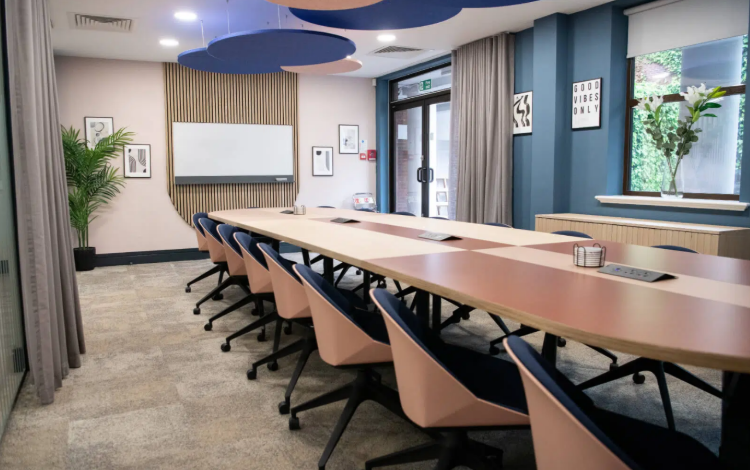
Across the North of England, this shift has led to increased demand for professional facilities like meeting rooms in North England, where teams can gather for collaboration, client meetings and strategic discussions without the need for a full-time office base.
This transition has been driven not only by necessity but also by opportunity. Companies have realised that flexible working can reduce overheads, improve productivity and support a better work-life balance for employees.
The Rise of Hybrid Models
Hybrid working has become the norm for many organisations. Rather than requiring daily attendance, businesses are focusing on outcomes and performance.
In this model, the office is no longer a place for routine tasks but a hub for collaboration, meetings and team-building. This change has led to a re-evaluation of workspace needs, with companies prioritising quality over quantity.
Flexible environments, including coworking spaces and serviced offices, are ideally suited to this approach. They provide professional settings when required, without the burden of long-term commitments.
Flexibility as a Business Advantage
One of the main advantages of flexible work environments is improved cost control. Traditional office leases often involve significant financial commitments, including rent, utilities and maintenance, which can be restrictive for many businesses. In contrast, flexible workspaces offer a more predictable and manageable cost structure, allowing companies to pay only for what they use.
This approach gives organisations the freedom to scale their space up or down as needed, which is particularly valuable in uncertain economic conditions. For businesses across the North of England, this flexibility is helping to unlock growth by reducing overheads and freeing up resources for investment in areas such as innovation and recruitment.
At the same time, flexible workspaces lower the barriers to entry for start-ups and SMEs, enabling them to establish a professional presence without large upfront costs. Larger organisations are also benefiting, using flexible offices as satellite locations to expand into new regions with minimal risk.
Enhancing Collaboration and Productivity
The Importance of Face-to-Face Interaction
While remote working offers convenience, in-person interaction remains essential for many aspects of business. Meetings, brainstorming sessions and client presentations often benefit from being conducted in a shared physical space.
Flexible work environments address this need by providing access to high-quality meeting rooms and collaborative areas. These spaces are designed to support communication, creativity and decision-making.
In the North, improved access to meeting facilities is enabling businesses to connect more easily across cities and regions. Teams can come together when it matters most, without the need for a permanent office base.
Creating Better Work Experiences
Employee experience has become a central focus for modern organisations. Flexible workspaces are designed with comfort and wellbeing in mind, offering features such as natural light, ergonomic furniture and inviting communal areas.
These elements contribute to a more positive working environment, helping employees feel motivated and engaged. When people have access to spaces that suit different tasks productivity naturally improves.
In addition, flexible environments often foster a sense of community attracting better candidates to the team. Shared spaces encourage networking and knowledge exchange, creating opportunities for collaboration between businesses and individuals.
Regional Growth and Opportunity
The Rise of the North
The North of England continues to play an increasingly important role in the UK economy. Cities such as Leeds, Sheffield, Harrogate, York and Newcastle are attracting investment across sectors including technology, finance and creative industries.
Flexible work environments are supporting this growth by making it easier for businesses to establish and expand their presence in these regions. Companies can access high-quality workspace without the constraints of traditional office models, making regional expansion more accessible.
This trend is also helping to rebalance the UK economy, reducing reliance on London and encouraging growth across multiple regions.
Supporting Local Economies
The shift towards flexible working is having a positive impact on local economies. Businesses using shared workspaces contribute to city-centre activity, supporting retail, hospitality and transport sectors.
At the same time, the availability of flexible offices and meeting spaces is attracting new businesses to the area. This creates a virtuous cycle, where increased demand leads to further investment and development.
The UK’s transition towards flexible work environments reflects a broader change in the nature of work itself. Businesses are no longer defined by fixed locations or rigid schedules, but by their ability to adapt and innovate.
From the growing demand for meeting rooms in the North of England to the widespread adoption of hybrid working, it is clear that flexibility is shaping the future of business. By embracing these changes, organisations can create more efficient, inclusive and resilient workplaces.